Wednesday, November 10, 2010

HERE IT COMES....


My Holiday Gift Guide Event is about to begin, so keep your eyes peeled for some amazing gift ideas, product reviews and best of all...GIVEAWAYS! You DO NOT want to miss this!

Thursday, November 4, 2010

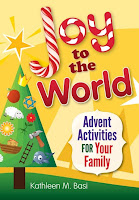
Joy to the World: Advent Activities for your Family by Kathleen M. Basi

It is time for a FIRST Wild Card Tour book review! If you wish to join the FIRST blog alliance, just click the button. We are a group of reviewers who tour Christian books. A Wild Card post includes a brief bio of the author and a full chapter from each book toured. The reason it is called a FIRST Wild Card Tour is that you never know if the book will be fiction, non~fiction, for young, or for old...or for somewhere in between! Enjoy your free peek into the book!

You never know when I might play a wild card on you!


Today's Wild Card author is:


and the book:


Joy to the World: Advent Activities for your Family

Liguori Publications (July 1, 2010)

***Special thanks to Rebecca Molen of Liguori Publications for sending me a review copy.***

ABOUT THE AUTHOR:


Kathleen Basi is a stay-at-home mom, freelance writer, flute and voice teacher, composer, choir director, natural family planning teacher, scrapbooker, sometime-chef and budding disability rights activist. She puts her juggling skills on display on her website (see below).


Visit the author's website.


Product Details:

List Price: $5.99
Paperback: 80 pages
Publisher: Liguori Publications (July 1, 2010)
Language: English
ISBN-10: 0764819372
ISBN-13: 978-0764819377

AND NOW...THE FIRST CHAPTER:


Introduction

Reclaiming
Advent

Call it December madness: On the day after Thanksgiving 2008, a seasonal worker was trampled to death by shoppers swarming a department store at opening time. In mid-America, two women got into a fist fight over a toy, and the store personnel had to pull them off each other.

At this time of year, it’s hardly possible to escape feeling rushed, harried, and overwhelmed. It seems like every year the Christmas decorations at the mall go up a little earlier, and all the news reports dwell on how much money retailers are (or aren’t) going to make. The ad inserts get fatter and the TV shouts: “No need to wait! Zero down! No interest for thirteen months! Hurry, hurry, hurry!”

Just about everyone gripes about it, but no one seems to know what to do about it. Some families throw out the whole secular celebration in an attempt to prevent materialism from overwhelming both Advent and Christmas. But most families feel—rightly so—that they shouldn’t have to choose one over the other. It’s supposed to be “the most wonderful time of the year,” but often families feel stressed as the calendar fills up with recitals, shopping, parties, and housecleaning. In this atmosphere filled with distractions, the idea of Advent as a season in its own right has been overwhelmed. How can we wait for Christmas when we never have to wait for anything else?

Christmas is not about children, gifts, cookies, or trees. It’s about a love so powerful that God came to earth to dwell among us: human and divine intertwining—a holy union of wills that reaches its apex not in birth, but in crucifixion and resurrection. In salvation.

And we spend December fighting over Blu-ray discs and toys?

It’s time to reclaim Advent—that season of holy hush, of waiting, of light and anticipation—that season that helps make Christmas so special. We can’t withdraw from the world, but we can take the trappings of the season and infuse them with a deeper meaning. Joy to the World: Advent Activities for Your Family outlines a way to reconcile the secular with the sacred—to celebrate them side-by-side, to mold them into a single, month-long “liturgy,” and in so doing, to enrich both celebrations.

Chapter 1 presents a brief overview of Advent and why it is important. Chapter 2 introduces the three parts of the Advent Reclamation Project, which are explained more fully in Chapters 3 through 5. Chapter 6 offers suggestions for other traditions that families or parish communities might choose to adopt as their own, and in the appendices, you will find resources to flesh out the earlier chapters.

Early childhood is the ideal time to start developing family traditions, so this book is aimed at young families. Each chapter contains a short italicized section to be read directly to children, explaining some part of the celebration. As your family grows, you can adapt the traditions to fit your own circumstances. Many of the ideas will also translate to the classroom. Remember that Advent, like Sabbath, was not created for God’s sake, but for ours (see Mark 2:27). God doesn’t need it. We do.

Chapter

1

The Case
For Advent

Advent holds a unique place in the Christian calendar. For Catholics, it is the beginning of the liturgical year. It is a season in which the church is decked out in purple—a sign of penitence—yet the Scriptures also speak of joy, hope, and light.

The word “Advent” comes from a Latin word meaning arrival or coming. In the earliest days of the Church, all of life focused on the passion, death, and resurrection of Christ. After all, the Apostles expected the Second Coming during their lifetimes.

At this time, the ancient pagan cultures structured their seasonal celebrations on nature. The celebration of the winter solstice was the biggest festival of the year in ancient times. It centered upon the shortest day of the year—the day when the “unconquered” sun began slowly to take back the days. Gift-giving, feasting, lights, and greenery all originated in these pagan celebrations. As Christianity expanded into these lands, the Church adopted many of these traditions, infusing them with Christian meaning in order to ease the transition for its new members. Thus, sometime in the fourth century ad, Christmas—and Advent—made their appearances.

Originally, Advent was a forty-day period of fasting and penitence—a parallel to Lent. In the early centuries, the Church focused on preparing for the Second Coming. Not until the middle ages did Advent begin to point toward the birth of Christ. Over the centuries, many traditions cropped up surrounding the season. The Advent wreath grew out of a Pagan tradition of lighting candles to signify the hope of spring. The Jesse tree probably originated in Northern Europe, where lineage and genealogy determined one’s place in society. The Jesse tree taught the faithful about Jesus’ royal lineage. Over time, these customs (and the meanings associated with them) have evolved. Some grew more important, others less so.

Nowadays, the secular culture and many Protestant denominations make no distinction between Advent and Christmas. The Sundays of December are filled with the story of the Christ Child, and the Christmas celebration is over and done around New Year’s. But in Catholic tradition, the season of Advent focuses on the two “comings” of Christ—the Incarnation, when God came to Earth as human child, and the glorious Second Coming at the end of time. In fact, the readings for the first two weeks of Advent speak of John the Baptist “preparing the way” for Jesus, the grown man who turned the world upside down. Only in the later part of Advent does our focus zero in on Bethlehem.

This duality is something we experience even with our senses. Catholic churches are hung with violet for these four weeks—the color traditionally associated with penitence. But the purple we use at this time of year is different from the purple of Lent; it is meant to be a richer, royal purple, reminding us also that Christ is King.

Advent gives us a chance to meditate on:

Hope—for deliverance;

Expectation—for the coming of one who will bring justice to an unjust world;

Preparation—so that we may prepare our hearts to receive Christ, who is

Light—the light of the world.


These are beautiful themes. Why should Advent be shoved into a corner, nothing more than four weeks of filler before Christmas? Advent can be a magical time, if we approach it the right way.

Advent does not need to become a “second Lent,” but the violet hangings and vestments remind us that penitence remains an important part of the season. Advent gives us the chance to examine our hearts and “defrag” our scattered souls. To reorder our thinking and our priorities. To point our lives, for four weeks, toward Christmas, so that when we reach the holiday, it has meaning and beauty that is distinct from the four preceding weeks.

Nor is Christmas the end of the journey. Without Holy Week and the resurrection, the manger in Bethlehem would be unremarkable: just one more baby born in poverty. For Christians, the destination is Easter. Glorious as it is, Christmas is a stop along the way.

For the children:

Even though all the advertisements on TV are about Christmas, right now we are actually in the season of Advent. During Advent, our job is to get ready for Jesus to come and live in our hearts. At Christmas, we will celebrate Jesus being born as a baby—but he has promised us that he will come back again someday, and we need to be ready. One way we do this is by remembering our sins and trying to do better. This is called penitence, and it is why the church is decorated in purple. But Advent is also about looking forward to Jesus coming. We are excited because Jesus is the light of the world, and when he comes, he will make the world fair for everyone.

Wednesday, November 3, 2010

Everything Christmas by David Bordon and Thomas J. Winters

It is time for a FIRST Wild Card Tour book review! If you wish to join the FIRST blog alliance, just click the button. We are a group of reviewers who tour Christian books. A Wild Card post includes a brief bio of the author and a full chapter from each book toured. The reason it is called a FIRST Wild Card Tour is that you never know if the book will be fiction, non~fiction, for young, or for old...or for somewhere in between! Enjoy your free peek into the book!

You never know when I might play a wild card on you!


Today's Wild Card authors are:


and the book:


Everything Christmas

WaterBrook Press (October 5, 2010)

***Special thanks to Staci Carmichael, Marketing and Publicity Coordinator, Doubleday Religion / Waterbrook Multnomah, Divisions of Random House, Inc. for sending me a review copy.***

ABOUT THE AUTHORS:


David Bordon and Tom Winters are partners in Bordon-Winters, LLC, a book concept and packaging company that produces successful books and gift products. Their previous titles include the 101 Things You Should Do series, especially the popular 101 Things You Should Do Before Going to Heaven.


Product Details:

List Price: $14.99
Hardcover: 320 pages
Publisher: WaterBrook Press (October 5, 2010)
Language: English
ISBN-10: 030772929X
ISBN-13: 978-0307729293

AND NOW...THE FIRST CHAPTER:


December 1


Let Us Keep Christmas

Grace Noll Crowell

Whatever else be lost among the years,

Let us keep Christmas still a shining thing;

Whatever doubts assail us, or what fears,

Let us hold close one day, remembering

It’s poignant meaning for the hearts of men.

Let us get back our childlike faith again.


The History of Christmas

Many of our Christmas traditions were celebrated centuries before the Christ child was born. The twelve days of Christmas, the bright fires, the yule log, gift giving, carnivals, carolers going from house to house, holiday feasts, even church processions can all be traced back to the early Mesopotamians. These traditions were passed down throughout the known world and were popular in Rome long before the birth of Christ.

Most historians say that some three centuries after the birth of Christ, Christianity was spreading rapidly. Church leaders were alarmed that their converts continued to honor the ancient celebrations honoring pagan gods. Early Christians had chosen to keep the birth of their Christ child a solemn and religious holiday, without merriment. For centuries they had forbidden their members to take part in those ancient celebrations. But now it seemed it was a losing battle. As a compromise, they agreed to allow their members to partake in a demure and respectful celebration of the birth of Christ. Thus, the Christian celebration we know as Christmas was born in Rome, near the date 336 AD.

The actual date of Christ’s birth is unknown, so the early Christians chose December 25, probably to compete with the wildly popular Roman festival of Saturnalia. Eventually, most of the customs from the festival of Saturnalia were adopted into the celebration of Christmas and given new and sacred meanings.

Today, Christmas is both a holiday and a holy day. In America, it is the biggest event of the year, celebrated by people of all ages.


Christmas Every Day

William Dean Howells

The little girl came into her papa’s study, as she always did Saturday morning before breakfast, and asked for a story. He tried to beg off that morning, for he was very busy, but she would not let him. So he began:

“Well, once there was a little pig—”

She stopped him at the word. She said she had heard little pig stories till she was perfectly sick of them.

“Well, what kind of story shall I tell, then?”

“About Christmas. It’s getting to be the season.”

“Well!” Her papa roused himself. “Then I’ll tell you about the little girl that wanted it Christmas every day in the year. How would you like that?”

“First-rate!” said the little girl; and she nestled into comfortable shape in his lap, ready for listening.

“Very well, then, this little pig—Oh, what are you pounding me for?”

“Because you said little pig instead of little girl.”

“I should like to know what’s the difference between a little pig and a little girl that wanted Christmas every day!”

“Papa!” said the little girl warningly. At this her papa began to tell the story.

Once there was a little girl who liked Christmas so much that she wanted it to be Christmas every day in the year, and as soon as Thanksgiving was over she began to send postcards to the old Christmas Fairy to ask if she mightn’t have it. But the old Fairy never answered, and after a while the little girl found out that the Fairy wouldn’t notice anything but real letters sealed outside with a monogram—or your initial, anyway. So, then, she began to send letters, and just the day before Christmas, she got a letter from the Fairy, saying she might have it Christmas every day for a year, and then they would see about having it longer.

The little girl was excited already, preparing for the old-fashioned, once-a-year Christmas that was coming the next day. So she resolved to keep the Fairy’s promise to herself and surprise everybody with it as it kept coming true, but then it slipped out of her mind altogether.

She had a splendid Christmas. She went to bed early, so as to let Santa Claus fill the stockings, and in the morning she was up the first of anybody and found hers all lumpy with packages of candy, and oranges and grapes, and rubber balls, and all kinds of small presents. Then she waited until the rest of the family was up, and she burst into the library to look at the large presents laid out on the library table—books, and boxes of stationery, and dolls, and little stoves, and dozens of handkerchiefs, and inkstands, and skates, and photograph frames, and boxes of watercolors, and dolls’ houses—and the big Christmas tree, lighted and standing in the middle.

She had a splendid Christmas all day. She ate so much candy that she did not want any breakfast, and the whole forenoon the presents kept pouring in that had not been delivered the night before, and she went round giving the presents she had got for other people, and came home and ate turkey and cranberry for dinner, and plum pudding and nuts and raisins and oranges, and then went out and coasted, and came in with a stomachache crying, and her papa said he would see if his house was turned into that sort of fool’s paradise another year, and they had a light supper, and pretty early everybody went to bed cross.

The little girl slept very heavily and very late, but she was wakened at last by the other children dancing around her bed with their stockings full of presents in their hands. “Christmas! Christmas! Christmas!” they all shouted.

“Nonsense! It was Christmas yesterday,” said the little girl, rubbing her eyes sleepily.

Her brothers and sisters just laughed. “We don’t know about that. It’s Christmas today, anyway. You come into the library and see.”

Then all at once it flashed on the little girl that the Fairy was keeping her promise, and her year of Christmases was beginning. She was dreadfully sleepy, but she sprang up and darted into the library. There it was again! Books, and boxes of stationery, and dolls, and so on.

There was the Christmas tree blazing away, and the family picking out their presents, and her father looking perfectly puzzled, and her mother ready to cry. “I’m sure I don’t see how I’m to dispose of all these things,” said her mother, and her father said it seemed to him they had had something just like it the day before, but he supposed he must have dreamed it. This struck the little girl as the best kind of a joke, and so she ate so much candy she didn’t want any breakfast, and went round carrying presents, and had turkey and cranberry for dinner, and then went out and coasted, and came in with a stomachache, crying.

Now, the next day, it was the same thing over again, but everybody getting crosser, and at the end of a week’s time so many people had lost their tempers that you could pick up lost tempers anywhere, they perfectly strewed the ground. Even when people tried to recover their tempers they usually got somebody else’s, and it made the most dreadful mix.

The little girl began to get frightened, keeping the secret all to herself, she wanted to tell her mother, but she didn’t dare to, and she was ashamed to ask the Fairy to take back her gift, it seemed ungrateful and ill-bred. So it went on and on, and it was Christmas on St. Valentine’s Day and Washington’s Birthday, just the same as any day, and it didn’t skip even the First of April, though everything was counterfeit that day, and that was some little relief.

After a while turkeys got to be awfully scarce, selling for about a thousand dollars apiece. They got to passing off almost anything for turkeys—even half-grown hummingbirds. And cranberries—well they asked a diamond apiece for cranberries. All the woods and orchards were cut down for Christmas trees. After a while they had to make Christmas trees out of rags. But there were plenty of rags, because people got so poor, buying presents for one another, that they couldn’t get any new clothes, and they just wore their old ones to tatters. They got so poor that everybody had to go to the poorhouse, except the confectioners, and the storekeepers, and the book sellers, and they all got so rich and proud that they would hardly wait upon a person when he came to buy. It was perfectly shameful!

After it had gone on about three or four months, the little girl, whenever she came into the room in the morning and saw those great ugly, lumpy stockings dangling at the fireplace, and the disgusting presents around everywhere, used to sit down and burst out crying. In six months she was perfectly exhausted, she couldn’t even cry anymore.

And now it was on the Fourth of July! On the Fourth of July, the first boy in the United States woke up and found out that his firecrackers and toy pistol and two-dollar collection of fireworks were nothing but sugar and candy painted up to look like fireworks. Before ten o’clock every boy in the United States discovered that his July Fourth things had turned into Christmas things and was so mad. The Fourth of July orations all turned into Christmas carols, and when anybody tried to read the Declaration of Independence, instead of saying, “When in the course of human events it becomes necessary,” he was sure to sing, “God rest you merry gentlemen.” It was perfectly awful.

About the beginning of October the little girl took to sitting down on dolls wherever she found them—she hated the sight of them so, and by Thanksgiving she just slammed her presents across the room. By that time people didn’t carry presents around nicely anymore. They flung them over the fence or through the window, and, instead of taking great pains to write “For dear Papa,” or “Mama “ or “Brother,” or “Sister,” they used to write, “Take it, you horrid old thing!” and then go and bang it against the front door.

Nearly everybody had built barns to hold their presents, but pretty soon the barns overflowed, and then they used to let them lie out in the rain, or anywhere. Sometimes the police used to come and tell them to shovel their presents off the sidewalk or they would arrest them.

Before Thanksgiving came it had leaked out who had caused all these Christmases. The little girl had suffered so much that she had talked about it in her sleep, and after that hardly anybody would play with her, because if it had not been for her greediness it wouldn’t have happened. And now, when it came Thanksgiving, and she wanted them to go to church, and have turkey, and show their gratitude, they said that all the turkeys had been eaten for her old Christmas dinners and if she would stop the Christmases, they would see about the gratitude. And the very next day the little girl began sending letters to the Christmas Fairy, and then telegrams, to stop it. But it didn’t do any good, and then she got to calling at the Fairy’s house, but the girl that came to the door always said, “Not at home,” or “Engaged,” or something like that, and so it went on till it came to the old once-a-year Christmas Eve. The little girl fell asleep, and when she woke up in the morning—

“She found it was all nothing but a dream,” suggested the little girl.

“No indeed!” said her papa. “It was all every bit true!”

“What did she find out, then?”

“Why, that it wasn’t Christmas at last, and wasn’t ever going to be, anymore. Now it’s time for breakfast.”

The little girl held her papa fast around the neck.

“You shan’t go if you’re going to leave it so!”

“How do you want it left?”

“Christmas once a year.”

“All right,” said her papa, and he went on again.

Well, with no Christmas ever again, there was the greatest rejoicing all over the country. People met together everywhere and kissed and cried for joy. Carts went around and gathered up all the candy and raisins and nuts, and dumped them into the river, and it made the fish perfectly sick. And the whole United States, as far out as Alaska, was one blaze of bonfires, where the children were burning up their presents of all kinds. They had the greatest time!

The little girl went to thank the old Fairy because she had stopped its being Christmas, and she said she hoped the Fairy would keep her promise and see that Christmas never, never came again. Then the Fairy frowned, and said that now the little girl was behaving just as greedily as ever, and she’d better look out. This made the little girl think it all over carefully again, and she said she would be willing to have it Christmas about once in a thousand years, and then she said a hundred, and then she said ten, and at last she got down to one. Then the Fairy said that was the good old way that had pleased people ever since Christmas began, and she was agreed. Then the little girl said, “What’re your shoes made of?” And the Fairy said, “Leather.” And the little girl said, “Bargain’s done forever,” and skipped off, and hippity-hopped the whole way home, she was so glad.

“How will that do?” asked the papa.

“First-rate!” said the little girl, but she hated to have the story stop, and was rather sober. However, her mama put her head in at the door and asked her papa:

“Are you never coming to breakfast? What have you been telling that child?”

“Oh, just a tale with a moral.”

The little girl caught him around the neck again.

“We know! Don’t you tell what, papa! Don’t you tell what!”


William Dean Howells (1837—1920) Best known as an editor and critic, this American fiction writer produced more than forty novels and story collections. He challenged American authors to choose American subjects, portray them honestly, and create characters who use native-American speech. As a critic, he helped to introduce writers like Mark Twain, Hamlin Garland, and Stephen Crane to American readers.


What is Christmas? It is tenderness for the past,

courage for the present, hope for the future.

It is a fervent wish that every cup may overflow

with blessings rich and eternal, and that

every path may lead to peace.

Agnes M. Pharo


Scented Applesauce-Cinnamon

Ornaments


3 cups applesauce

3 cups ground cinnamon


Mix applesauce and cinnamon together until it is thick enough to hold a form. Flatten the mixture on a flat surface and cut into cookie-cutter shapes.

Place cookie shapes on a cookie sheet to dry for 3 to 4 days depending on the size and thickness of the cookies. If using as a hanging ornament, make a hole with a toothpick before drying.

Makes 15 ornaments.


Chestnut Dressing

8 Tbsp. butter

3 ribs celery with leaves, chopped

16 ounces chestnuts

1 large chopped onion

1/4 cup chopped parsley

1 pound sourdough bread, cubed

3 cups turkey stock


Preheat oven to 400°F. Cut a deep X into the flattest side of each chestnut and place in a single layer on a baking sheet. Bake 30 minutes, or until outer skin of chestnut splits. Wrap roasted chestnuts in a towel to keep warm. Peel off the tough outer skin of the chestnut and thinner inner skin with a sharp knife. Chop the chestnuts coarsely and set aside.

Melt butter in a large skillet over medium heat. Add onion and celery and cook, stirring occasionally, for 10 minutes. Empty skillet contents into a large bowl. Add cubed bread, parsley, and enough stock to moisten the mix, about 2 1/2 cups. Stir in chestnuts and add salt and pepper to taste.

Use to stuff poultry or place in a buttered baking dish, drizzle with 1/2 cup more stock, and bake 30 minutes to an hour.

Makes 10–11 cups.


Roasted Goose

1 goose, 10–12 pounds

1 orange, halved

kosher salt and black pepper, to taste

For giblet stock (used in gravy):

2 onions, quartered

1 carrot, chopped

2 celery stalks, chopped

2 pints of water

2 sprigs of sage

2 sprigs fresh thyme

1 Tbsp. cornstarch (to thicken)


The goose should be defrosted and left at room temperature for at least 2 or 3 hours before cooking to bring it to equilibrium. This will improve the overall texture of the finished product. Remove the giblets from the goose and set aside. Wash the bird thoroughly inside and out with cool water and pat dry with a kitchen towel. Cut away any loose pieces of fat. Then rub the orange inside and outside of the bird. Mix the salt and pepper and rub into the skin and inside the cavity of the bird to season it.

Preheat the oven to 425°F.

Truss the bird by folding the wings back under the body. Then tie the legs together with butcher’s twine. Lightly prick the skin of the bird several times with a fork to allow the fat to adequately render during the cooking process. It is important not to pierce the flesh of the bird. Place the goose breast-side up on a rack in the roasting pan, and bake in the oven for approximately 30 minutes to develop some initial color. Then reduce the oven temperature to 325°F and continue cooking for approximately 3 hours.

Make a simple giblet stock to fortify and enrich the gravy while the goose is roasting by placing the giblets in a saucepan with some goose fat and cooking over low heat until browned. Add chopped onion, carrot, celery, herbs, and water. Bring to a boil and then simmer gently for about one hour. Strain and cool until needed.

The goose is done when the internal temperature of the thigh reaches 175°F. For a visual test to see if the goose is cooked, insert a skewer into the thickest part of the thigh. If the juices run clear, then it is ready. If not, then return to the oven for additional roasting time.

Once the goose is cooked, allow it to rest for 20–30 minutes. This will allow the meat to firm up and will help retain the juiciness of the bird. Remove all of the drippings from the roasting pan, strain, and remove the fat. Add these defatted drippings to the giblet broth and season to taste. To thicken the gravy, combine 1 Tbsp. of cornstarch with 3 Tbsp. of water and add to the gravy. Bring to a boil and simmer for 1–2 minutes or until thickened.


O Little Town of Bethlehem

Phillips Brooks


O little town of Bethlehem, how still we see thee lie!

Above thy deep and dreamless sleep the silent stars go by.

Yet in thy dark streets shineth the everlasting Light;

The hopes and fears of all the years are met in thee tonight.

For Christ is born of Mary, and gathered all above,

While mortals sleep, the angels keep their watch of wondering love.

O morning stars together, proclaim the holy birth,

And praises sing to God the King, and peace to men on earth!

How silently, how silently, the wondrous Gift is giv’n;

So God imparts to human hearts the blessings of His heav’n.

No ear may hear His coming, but in this world of sin,

Where meek souls will receive Him still, the dear Christ enters in.

Where children pure and happy pray to the blessed Child,

Where misery cries out to Thee, Son of the mother mild;

Where charity stands watching and faith holds wide the door,

The dark night wakes, the glory breaks, and Christmas comes once more.

O holy Child of Bethlehem, descend to us, we pray;

Cast out our sin, and enter in, be born in us today.

We hear the Christmas angels the great glad tidings tell;

O come to us, abide with us, our Lord Emmanuel!


Historical Note:

On Christmas Eve, 1865, Phillips Brooks was in Jerusalem, a trip intended to inspire spiritual rebirth after the horrors of the Civil War. Just a few months earlier, he had spoken at the funeral of President Abraham Lincoln. That clear night as he walked the streets of the Holy City, he had a sudden inspiration. Renting a horse, he set out for Bethlehem. After a solitary journey under the clear night sky, Brooks reached the tiny, remote village and was surrounded by the spirit of the first Christmas. His impoverished soul was refreshed as he considered what had happened there so many years before. Three years later on Christmas Eve, 1868, as he sat alone in his study preparing his sermon for the next day, he felt inspired to pen the words to this beautiful carol.


I, the Lord All-Powerful,

will send my messenger

to prepare the way for me.

Then suddenly the Lord

you are looking for

will appear in his temple.

The messenger you desire

is coming with my promise,

and he is on his way.

(Malachi 3:1, cev)

Thursday, October 28, 2010

The Museum CD Winner!

The winner of the CD from The Museum is...

Comment #11 - Kim

CONGRATULATIONS

Wednesday, October 27, 2010

Wind & Weather Winner!

The winner of the Weather Direct Basic from Wind & Weather is...

Comment #50 - Kowanda

CONGRATULATIONS!

Friday, October 22, 2010

The Museum - Let Love Win *Review & Giveaway*


I LOVE LOVE LOVE this awesome CD I was lucky enough to be able to review from a great band called The Museum. The name of the album is Let Love Win and the song of the same name is great!

I wasn't sure what to expect from the CD, but the guys on the front looked pretty cool, so I thought I'd give it a shot. I instantly loved the lead singer's voice and was I ever surprised when I listened to the whole entire CD and there wasn't one single song that I thought might "take some getting used to", they were all good!

My husband and I listened to the CD for the first time in his office at work while we were both working on some things and we both kept commenting on how all the songs were good. I particularly liked the songs You Are Love, My Help Comes From the Lord and Allelujah. Something about them just drew me in.

When it comes to new Christian bands, I would have to say they are at the top of my list. They have a great sounds, the lyrics of their songs have great meaning and their music is something that I see myself enjoying and sharing with others...kinda like I'm doing right now, actually!

Speaking of sharing their music, Overture Media has offered one of their CDs to one of my lucky readers! If you're looking for a great new Christian band...you want this, trust me! See below for how to gain entries...

BE SURE TO FOLLOW THE ENTRY DIRECTIONS EXACTLY FOR YOUR ENTRIES TO COUNT!!!!


This contest will be open until 11:59 PM on October 27th. At that time I will use random.org to determine the winner. The winner will then be emailed and have 24 hours to respond, otherwise I will choose a new winner. This contest is open to U.S. residents.

LEAVE SEPARATE COMMENTS FOR EACH ENTRY AND LEAVE YOUR EMAIL ADDRESS IN THIS FORM - Jane (at) yahoo (dot) com


MANDATORY ENTRY: Tell me who your favorite Christian artist or band is. (1 entry)

Extra Entries:

Follow my blog (publicly via google friend connect, located on the top sidebar) - You can use this as an entry whether you are a new follower or a current follower. (1 entry)

Subscribe to my blog via the sign-up found on the right sidebar of my blog to be sure to never miss a great giveaway! (1 entry)

Follow my blog via Networked Blogs, located on the right sidebar under google friend connect. (1 entry)

"Like" my Facebook page, located on the right sidebar. (1 entry)

Place my Finally Finding Me button on your blog and leave me a comment saying you did. The button is found on the right sidebar of my blog.
(1 entry)

Blog about this giveaway with a link to my blog and leave me the link to your post. (1 entry)


That's 7 chances to win! Good luck!


Disclosure: I was provided with a review copy of this album from Overture Media. The views and opinions expressed in this review are my own and I was in no way persuaded by the company involved.

Thursday, October 21, 2010

Two Tickets to the Christmas Ball by Donita K. Paul

It is time for a FIRST Wild Card Tour book review! If you wish to join the FIRST blog alliance, just click the button. We are a group of reviewers who tour Christian books. A Wild Card post includes a brief bio of the author and a full chapter from each book toured. The reason it is called a FIRST Wild Card Tour is that you never know if the book will be fiction, non~fiction, for young, or for old...or for somewhere in between! Enjoy your free peek into the book!

You never know when I might play a wild card on you!


Today's Wild Card author is:


and the book:


Two Tickets to the Christmas Ball

WaterBrook Press (October 5, 2010)

***Special thanks to Ashley Boyer and Staci Carmichael of Waterbrook Multnomah for sending me a review copy.***

ABOUT THE AUTHOR:


Expertly weaving together fantasy, romance and Biblical truths, Donita K. Paul penned the best-selling, fan-favorite DragonKeeper Chronicles series. After retiring early from teaching, she began a second career as an award-winning author and loves serving as a mentor for new writers of all ages. And when she’s not putting pen to paper, Donita makes her home in Colorado Springs and enjoys spending time with her grandsons, cooking, beading, stamping, and knitting.


Visit the author's website.

Product Details:

List Price: $14.99
Hardcover: 240 pages
Publisher: WaterBrook Press (October 5, 2010)
Language: English
ISBN-10: 0307458997
ISBN-13: 978-0307458995

AND NOW...THE FIRST CHAPTER:


Christmas. Cora had been trying to catch it for four years. She scurried down the sidewalk, thankful that streetlights and brightly lit storefronts counteracted the gloom of early nightfall. Somewhere, sometime, she’d get a hold of how to celebrate Christmas. Maybe even tonight.

With snowflakes sticking to her black coat, Christmas lights blinking around shop windows, and incessant bells jingling, Cora should have felt some holiday cheer.

And she did.

Really.

Just not much.

At least she was on a Christmas errand this very minute. One present for a member of the family. Shouldn’t that count for a bit of credit in the Christmas-spirit department?

Cora planned out her Christmas gift giving in a reasonable manner. The execution of her purchasing schedule gave her a great deal of satisfaction. Tonight’s quest was a book for Uncle Eric—something about knights and castles, sword fights, shining armor, and all that.

One or two gifts purchased each week from Labor Day until December 15, and her obligations were discharged efficiently, economically, and without the excruciating last-minute frenzy that descended upon other people…like her three sisters, her mother, her grandmother, her aunts.

Cora refused to behave like her female relatives and had decided not to emulate the male side of the family either. The men didn’t buy gifts. They sometimes exchanged bottles from the liquor store, but more often they drank the spirits themselves.

Her adult ambition had been to develop her own traditions for the season, ones that sprouted from the Christianity she’d discovered in college. The right way to celebrate the birth of Christ. She avoided the chaos that could choke Christmas. Oh dear. Judgmental again. At least now she recognized when she slipped.

She glanced around Sage Street. Not too many shoppers. The quaint old shops were decked out for the holidays, but not with LED bulbs and inflated cartoon figures.

Since discovering Christianity, she’d been confused about the trappings of Christmas—the gift giving, the nativity scenes, the carols, even the Christmas tree. Every year she tried to acquire some historical background on the festivities. She was learning. She had hope. But she hadn’t wrapped her head around all the traditions yet.

The worst part was shopping.

Frenzy undid her. Order sustained her. And that was a good reason to steer clear of any commercialized holiday rush. She’d rather screw red light bulbs into plastic reindeer faces than push through a crowd of shoppers.

Cora examined the paper in her hand and compared it to the address above the nearest shop. Number 483 on the paper and 527 on the building. Close.

When she’d found the bookstore online, she had been amazed that a row of old-fashioned retailers still existed a few blocks from the high-rise office building where she worked. Truthfully, it was more like the bookstore found her. Every time she opened her browser, and on every site she visited, the ad for the old-fashioned new- and used-book store showed up in a banner or sidebar. She’d asked around, but none of her co-workers patronized the Sage Street Shopping District.

“Sounds like a derelict area to me,” said Meg, the receptionist. “Sage Street is near the old railroad station, isn’t it? The one they decided was historic so they wouldn’t tear it down, even though it’s empty and an eyesore?”

An odd desire to explore something other than the mall near her apartment seized Cora. “I’m going to check it out.”

Jake, the security guard, frowned at her. “Take a cab. You don’t want to be out too late over there.”

Cora walked. The brisk air strengthened her lungs, right? The exercise pumped her blood, right? A cab would cost three, maybe four dollars, right?

An old man, sitting on the stoop of a door marked 503, nodded at her. She smiled, and he winked as he gave her a toothless grin. Startled, she quickened her pace and gladly joined the four other pedestrians waiting at the corner for the light to change.

Number 497 emblazoned the window of an ancient shoe store on the opposite corner. She marched on. In this block she’d find the book and check another item off her Christmas list.

Finally! “Warner, Werner, and Wizbotterdad, Books,” Cora read the sign aloud and then grasped the shiny knob. It didn’t turn. She frowned. Stuck? Locked? The lights were on. She pressed her face against the glass. A man sat at the counter. Reading. How appropriate.

Cora wrenched the knob. A gust of wind pushed with her against the door, and she blew into the room. She stumbled and straightened, and before she could grab the door and close it properly, it swung closed, without the loud bang she expected.

“I don’t like loud noises,” the man said without looking up from his book.

“Neither do I,” said Cora.

He nodded over his book. With one gnarled finger, he pushed his glasses back up his nose.

Must be an interesting book. Cora took a quick look around. The place could use stronger lights. She glanced back at the clerk. His bright lamp cast him and his book in a golden glow.

Should she peruse the stacks or ask?

She decided to browse. She started to enter the aisle between two towering bookcases.

“Not there,” said the old man.

“I beg your pardon?” said Cora.

“How-to books. How to fix a leaky faucet. How to build a bridge. How to mulch tomatoes. How to sing opera. How-to books. You don’t need to know any of that, do you?”

“No.”

“Wrong aisle, then.” He placed the heavy volume on the counter and leaned over it, apparently absorbed once more.

Cora took a step toward him. “I think I saw a movie like this once.”

His head jerked up, his scowl heavier. He glared over the top of his glasses at the books on the shelves as if they had suddenly moved or spoken or turned bright orange.

“A movie? Here? I suppose you mean the backdrop of a bookstore. Not so unusual.” He arched an eyebrow. “You’ve Got Mail and 84 Charing Cross Road.”

“I meant the dialogue. You spoke as if you knew what I needed.”

He hunched his shoulders. The dark suspenders stretched across the faded blue of his shirt. “Reading customers. Been in the business a long time.”

“I’m looking for a book for my uncle. He likes castles, knights, tales of adventure. That sort of thing.”

He sighed, closed his book, and tapped its cover. “This is it.” He stood as Cora came to the desk. “Do you want me to wrap it and send it? We have the service. My grandson’s idea.”

Cora schooled her face and her voice. One of the things she excelled in was not showing her exasperation. She’d been trained by a dysfunctional family, and that had its benefits. She knew how to take guff and not give it back. Maintaining a calm attitude was a good job skill.

She tried a friendly smile and addressed the salesclerk.

“I want to look at it first and find out how much it costs.”

“It’s the book you want, and the price is eleven dollars and thirteen cents.”

Cora rubbed her hand over the cover. It looked and felt like leather, old leather, but in good repair. The book must be ancient.

“Are you sure?” she asked.

“Which?” the old man barked.

“Which what?”

“Which part of the statement am I sure about? It doesn’t matter because I’m sure about both.”

Cora felt her armor of detachment suffer a dent. The man was impossible. She could probably order a book online and get it wrapped and delivered right to her uncle with less aggravation. But dollar signs blinked in neon red in her mind as she thought how much that would cost. No need to be hasty.

Curtain rings rattled on a rod, and Cora looked up to see a younger version of the curmudgeon step into the area behind the counter.

The younger man smiled. He had the same small, wiry build as the older version, but his smile was warm and genuine. He looked to be about fifty, but his hair was still black, as black as the old man’s hair was white. He stretched out his hand, and Cora shook it.

“I’m Bill Wizbotterdad. This is my granddad, William Wizbotterdad.”

“Let me guess. Your father is named Will?”

Bill grinned, obviously pleased she’d caught on quickly. “Willie Wizbotterdad. He’s off in Europe collecting rare books.”

“He’s not!” said the elder shop owner.

“He is.” Bill cast his granddad a worried look.

“That’s just the reason he gave for not being here.” William shook his head and leaned across the counter. “He doesn’t like Christmas. We have a special job to do at Christmas, and he doesn’t like people and dancing and matrimony.”

Bill put his arm around his grandfather and pulled him back. He let go of his granddad and spun the book on the scarred wooden counter so that Cora could read the contents. “Take a look.” He opened the cover and flipped through the pages. “Colored illustrations.”

A rattling of the door knob was followed by the sound of a shoulder thudding against the wood. Cora turned to see the door fly open with a tall man attached to it. The stranger brushed snow from his sleeves, then looked up at the two shop owners. Cora caught them giving each other a smug smile, a wink, and a nod of the head.

Odd. Lots of oddness in this shop.

She liked the book, and she wanted to leave before more snow accumulated on the streets. Yet something peculiar about this shop and the two men made her curious. Part of her longed to linger. However, smart girls trusted their instincts and didn’t hang around places that oozed mystery. She didn’t feel threatened, just intrigued. But getting to know the peculiar booksellers better was the last thing she wanted, right? She needed to get home and be done with this Christmas shopping business. “I’ll take the book.”

The newcomer stomped his feet on the mat by the door, then took off his hat.

Cora did a double take. “Mr. Derrick!”

He cocked his head and scrunched his face. “Do I know you?” The man was handsome, even wearing that comical lost expression. “Excuse me. Have we met?”

“We work in the same office.”

He studied her a moment, and a look of recognition lifted the frown. “Third desk on the right.” He hesitated, then snapped his fingers. “Cora Crowden.”

“Crowder.”

He jammed his hand in his pocket, moving his jacket aside. His tie hung loosely around his neck. She’d never seen him looking relaxed. The office clerks called him Serious Simon Derrick.

“I drew your name,” she said.

He looked puzzled.

“For the gift exchange. Tomorrow night. Office party.”

“Oh. Of course.” He nodded. “I drew Mrs. Hudson. She’s going to retire, and I heard her say she wanted to redecorate on a shoestring.”

“That’s Mrs. Wilson. Mrs. Hudson is taking leave to be with her daughter, who is giving birth to triplets.”

He frowned and began looking at the books.

“You won’t be there, will you?” Cora asked.

“At the party? No, I never come.”

“I know. I mean, I’ve worked at Sorenby’s for five years, and you’ve never been there.”

The puzzled expression returned to Serious Simon’s face. He glanced to the side. “I’m looking for the how-to section.”

Cora grinned. “On your left. Second aisle.”

He turned to stare at her, and she pointed to the shelves Mr. Wizbotterdad had not let her examine. Mr. Derrick took a step in that direction.

Cora looked back at the shop owners and caught them leaning back in identical postures, grins on their faces, and arms crossed over their chests.

Bill jerked away from the wall, grabbed her book, rummaged below the counter, and brought out a bag. He slid the book inside, then looked at her. “You didn’t want the book wrapped and delivered?”

“No, I’ll just pay for it now.”

“Are you sure you wouldn’t like to look around some more?” asked Bill.

“Right,” said William. “No hurry. Look around. Browse. You might find something you like.”

Bill elbowed William.

Simon Derrick had disappeared between the stacks.

William nodded toward the how-to books. “Get a book. We have a copy of How to Choose Gifts for Ungrateful Relatives. Third from the bottom shelf, second case from the wall.”

The statement earned him a “shh” from his grandson.

Cora shifted her attention to the man from her office and walked a few paces to peek around the shelves. “Mr. Derrick, I’m getting ready to leave. If you’re not coming to the party, may I just leave the gift on your desk tomorrow?”

He glanced at her before concentrating again on the many books. “That’s fine. Nice to see you, Miss Crowden.”

“Crowder,” she corrected, but he didn’t answer.

She went to the counter and paid. Mr. Derrick grunted when she said good-bye at the door.

“Come back again,” said Bill.

“Yes,” said William. “We have all your heart’s desires.”

Bill elbowed him, and Cora escaped into the blustering weather.

She hiked back to the office building. Snow sprayed her with tiny crystals, and the sharp wind nipped her nose. Inside the parking garage, warm air helped her thaw a bit as she walked to the spot she leased by the month. It would be a long ride home on slippery roads. But once she arrived, there would be no one there to interrupt her plans. She got in the car, turned the key, pushed the gearshift into reverse, looked over her shoulder, and backed out of her space.

She would get the gift ready to mail off and address a few cards in the quiet of her living room. There would be no yelling. That’s what she liked about living states away from her family. No one would ambush her with complaints and arguments when she walked through the door.

Except Skippy. Skippy waited. One fat, getting fatter, cat to talk to. She did complain at times about her mistress being gone too long, about her dinner being late, about things Cora could not fathom. But Cora never felt condemned by Skippy, just prodded a little.

_

Once inside her second-floor apartment, she pulled off her gloves, blew her nose, and went looking for Skippy.

The cat was not behind the curtain, sitting on the window seat, staring at falling snow. Not in her closet, curled up in a boot she’d knocked over. Not in the linen closet, sleeping on clean towels. She wasn’t in any of her favorite spots. Cora looked around and saw the paper bag that, this morning, had been filled with wadded scraps of Christmas paper. Balls of pretty paper and bits of ribbon littered the floor. There. Cora bent over and spied her calico cat in the bag.

“Did you have fun, Skippy?”

The cat rolled on her back and batted the top of the paper bag. Skippy then jumped from her cave and padded after Cora, as her owner headed for the bedroom.

Thirty minutes later, Cora sat at the dining room table in her cozy pink robe that enveloped her from neck to ankles. She stirred a bowl of soup and eyed the fifteen packages she’d wrapped earlier in the week. Two more sat waiting for their ribbons.

These would cost a lot less to send if some of these people were on speaking terms. She could box them together and ship them off in large boxes.

She spooned chicken and rice into her mouth and swallowed.

The soup was a tad too hot. She kept stirring.

She could send one package with seven gifts inside to Grandma Peterson, who could dispense them to her side of the family. She could send three to Aunt Carol.

She took another sip. Cooler.

Aunt Carol could keep her gift and give two to her kids. She could send five to her mom…

Cora grimaced. She had three much older sisters and one younger. “If Mom were on speaking terms with my sisters, that would help.”

She eyed Skippy, who had lifted a rear leg to clean between her back toes. “You don’t care, do you? Well, I’m trying to. And I think I’m doing a pretty good job with this Christmas thing.”

She reached over and flipped the switch on her radio. A Christmas carol poured out and jarred her nerves. She really should think about Christmas and not who received the presents. Better to think “my uncle” than “Joe, that bar bum and pool shark.”

She finished her dinner, watching her cat wash her front paws.

“You and I need to play. You’re”—she paused as Skippy turned

a meaningful glare at her—“getting a bit rotund, dear kitty.”

Skippy sneezed and commenced licking her chest.

After dinner, Cora curled up on the couch with her Warner, Werner, and Wizbotterdad bag. Skippy came to investigate the rattling paper.

Uncle Eric. Uncle Eric used to recite “You Are Old, Father William.” He said it was about a knight. But Cora wasn’t so sure. She dredged up memories from college English. The poem was by Lewis Carroll, who was really named Dodson, Dogson, Dodgson, or something.

“He wrote Alice’s Adventures in Wonderland,” she said. “There’s a cat in the story, but not as fine a cat as you. He smiles too much.”

Skippy gave her a squint-eyed look.

Cora eased the leather-bound book out of the bag. “The William I met at the bookstore qualifies for at least ancient.”

She put the book in her lap and ran her fingers over the embossed title: How the Knights Found Their Ladies.

She might have been hasty. She didn’t know if Uncle Eric would like this. She hefted the book, guessing its weight to be around four pounds. She should have found a lighter gift. This would cost a fortune to mail.

Skippy sniffed at the binding, feline curiosity piqued. Cora stroked her fur and pushed her back. She opened the book to have a peek inside. A piece of thick paper fell out. Skippy pounced on it as it twirled to the floor.

“What is it, kitty? A bookmark?” She slipped it out from between Skippy’s paws, then turned the rectangle over in her hands. Not a bookmark. A ticket.


Admit one to the Wizards’ Christmas Ball

Costumes required

Dinner and Dancing

and your Destiny


Never heard of it. She tucked the ticket in between the pages and continued to flip through the book, stopping to read an occasional paragraph.

This book wasn’t for Uncle Eric at all. It was not a history, it was a story. Kind of romantic too. Definitely not Uncle Eric’s preferred reading.

Skippy curled against her thigh and purred.

“You know what, cat? I’m going to keep it.”

Skippy made her approval known by stretching her neck up and rubbing her chin on the edge of the leather cover. Cora put the book on the sofa and picked up Skippy for a cuddle. The cat squirmed out of her arms, batted at the ticket sticking out of the pages, and scampered off.

“I love you too,” called Cora.

She pulled the ticket out and read it again: Wizards’ Christmas Ball. She turned out the light and headed for bed. But as she got ready, her eye caught the computer on her desk. Maybe she could find a bit more information.